Tag: ring settings

  • Halo vs Bezel vs Three-Stone Moissanite Rings

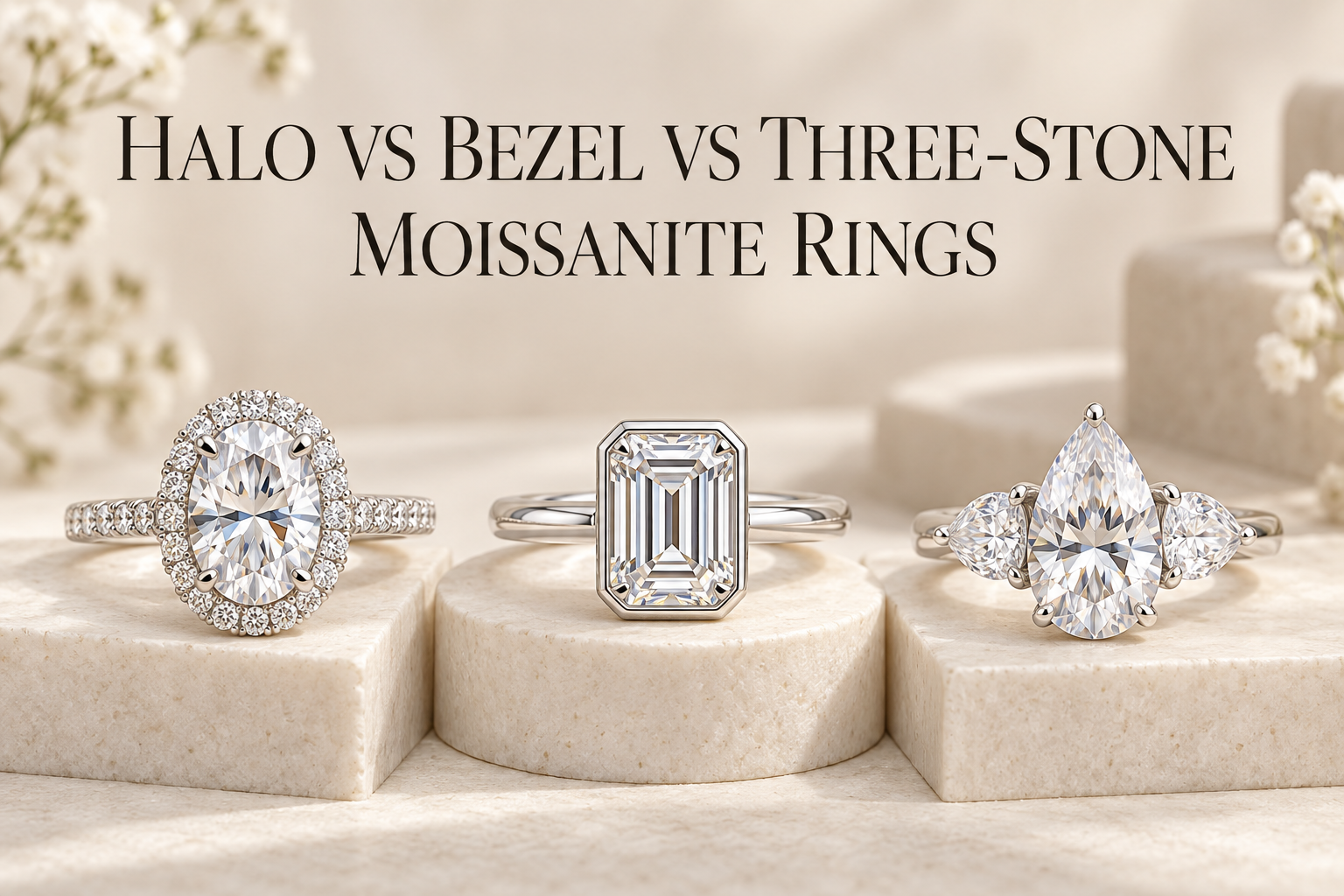
    Halo vs Bezel vs Three-Stone Moissanite Rings

    Choose a halo for the strongest visual spread and extra sparkle, a bezel for a smooth modern outline with fewer exposed stone edges, or a three-stone design for added width and a center-with-side-stones composition. These terms are not perfectly parallel: bezel describes how a stone is held, while halo and three-stone usually describe the arrangement of stones. One ring can combine them.

    DesignVisual effectEveryday consideration
    HaloFrames the center with smaller stones for more sparkle and apparent spreadMore small settings and spaces to inspect and clean
    BezelDefines the stone with a clean metal rimSmoother edge and fewer snag points, but more of the stone’s perimeter is covered
    Three-stoneAdds two side stones for width, balance and symbolismMore stones and setting points than a simple solitaire

    First, separate setting type from setting style

    A setting is the metal structure that secures a gemstone. A bezel is a thin rim of metal around the stone’s edge; prongs are separate metal claws. A setting style describes the overall arrangement, such as a solitaire, halo or three-stone ring. This distinction explains why a three-stone ring can use bezels, prongs or a mixture, and why a three-stone design can also include a halo.

    Product names often use “setting” more loosely in everyday shopping. The practical question is not which label wins, but what the ring physically contains: how many stones, how each one is held, how high the design sits and how much detailed cleaning it needs.

    Halo moissanite rings: maximum visual sparkle

    A halo surrounds the center stone with a frame of smaller accent stones. The extra outline can make the center area appear larger and brighter from above. It is a natural match for moissanite when the goal is conspicuous sparkle, a defined silhouette or a more decorative engagement-ring look.

    The trade-off is detail. Small stones create more tiny settings and spaces where lotion, soap residue and lint can collect. They should be cleaned gently and checked if the ring takes an impact. The Oval Moissanite Halo Ring is a clear MSEARTHIA example, with an oval center framed by a halo and S925 sterling silver listed as the metal.

    Bezel moissanite rings: a smooth, defined outline

    A bezel wraps a metal rim around all or part of the stone’s perimeter. Compared with exposed prongs, that rim can shield more of the edge and reduce snagging on clothing or gloves. The result often looks streamlined and contemporary, which suits shoppers who prefer crisp geometry over a heavily decorated frame.

    A bezel also covers more of the stone’s edge and can admit less light from the side than an open prong setting. That does not automatically make the ring dull: cut quality, cleaning, the opening beneath the stone and the complete design all influence its appearance. The Emerald Cut Moissanite Bezel Ring pairs a geometric emerald-cut center with a clean S925 sterling-silver bezel.

    Three-stone moissanite rings: width, balance and meaning

    A three-stone design places a center gemstone between two side stones. The side stones can extend the composition across the finger, repeat the center shape or introduce contrast. Many people associate the three stones with past, present and future, but the design works just as well as a visual choice without a symbolic meaning.

    Three stones mean more edges and setting points than a simple solitaire, so look closely at symmetry and how the stones meet. The Pear Cut Moissanite Three-Stone Ring uses a pear-shaped center with two side stones and lists S925 sterling silver. For a hybrid example, the Oval Three-Stone Moissanite Halo Ring combines a three-stone arrangement with halo detailing.

    Which design fits your priorities?

    • Choose halo when top-view sparkle and a larger-looking center composition matter most.
    • Choose bezel when you prefer a smooth perimeter, a modern line and less exposed stone edge.
    • Choose three-stone when you want visual width, side-stone contrast or the traditional three-part symbolism.
    • Choose a hybrid when you enjoy both a multi-stone layout and a decorative halo, while accepting the added cleaning detail.

    Lifestyle should narrow the choice, not dictate it. A well-made bezel can be practical for frequent wear, but no fine ring is impact-proof. A halo can suit everyday use when cared for properly. A three-stone ring can be low or high profile depending on its gallery and prongs. Inspect the actual product from the top and side rather than relying on the category name alone.

    Five checks before you choose

    1. View the profile. Top photos show the design, but side photos reveal height and how the center is supported.
    2. Count the maintenance points. More accent stones usually mean more small spaces and settings to monitor.
    3. Check the metal. Moissanite describes the stone; S925 or sterling silver describes the base metal.
    4. Confirm the selected variant. Carat labels, color, size, price and availability can change with the option.
    5. Get the fit right. A wider or heavier top can feel different on the finger; use our ring size guide as a starting point.

    Frequently asked questions

    Does a halo make a moissanite look bigger?

    A halo increases the visible outline around the center and can make the center composition appear larger from above. It does not change the center stone’s actual dimensions or carat label.

    Is a bezel always better for everyday wear?

    A bezel has fewer exposed edges and snag points than many prong designs, but workmanship, ring profile, metal condition and the wearer’s activities still matter. Remove fine jewelry for hard impacts, chemicals and abrasive work.

    Can a three-stone ring also have a halo?

    Yes. Three-stone describes the main stone arrangement, while a halo describes an accent-stone frame. A design can combine both, as shown by MSEARTHIA’s Oval Three-Stone Moissanite Halo Ring.

    Which style is easiest to clean?

    A simpler design with fewer stones and open access is generally easier to clean than a detailed halo. A bezel may have fewer snag points, but residue can still collect beneath or around the setting, so construction matters more than the label alone.

    Continue your research: read How to Choose a Moissanite Ring for stone, metal and seller checks, or use the Ring Size Guide before selecting a variant.

    Sources and methodology

    The technical distinction between a stone-holding setting and an overall setting style follows GIA’s ring-setting guide. MSEARTHIA product descriptions, material statements and live variants were checked on October 2, 2026. Product examples explain visible construction; they are not laboratory grading claims.
  • How to Choose a Moissanite Ring

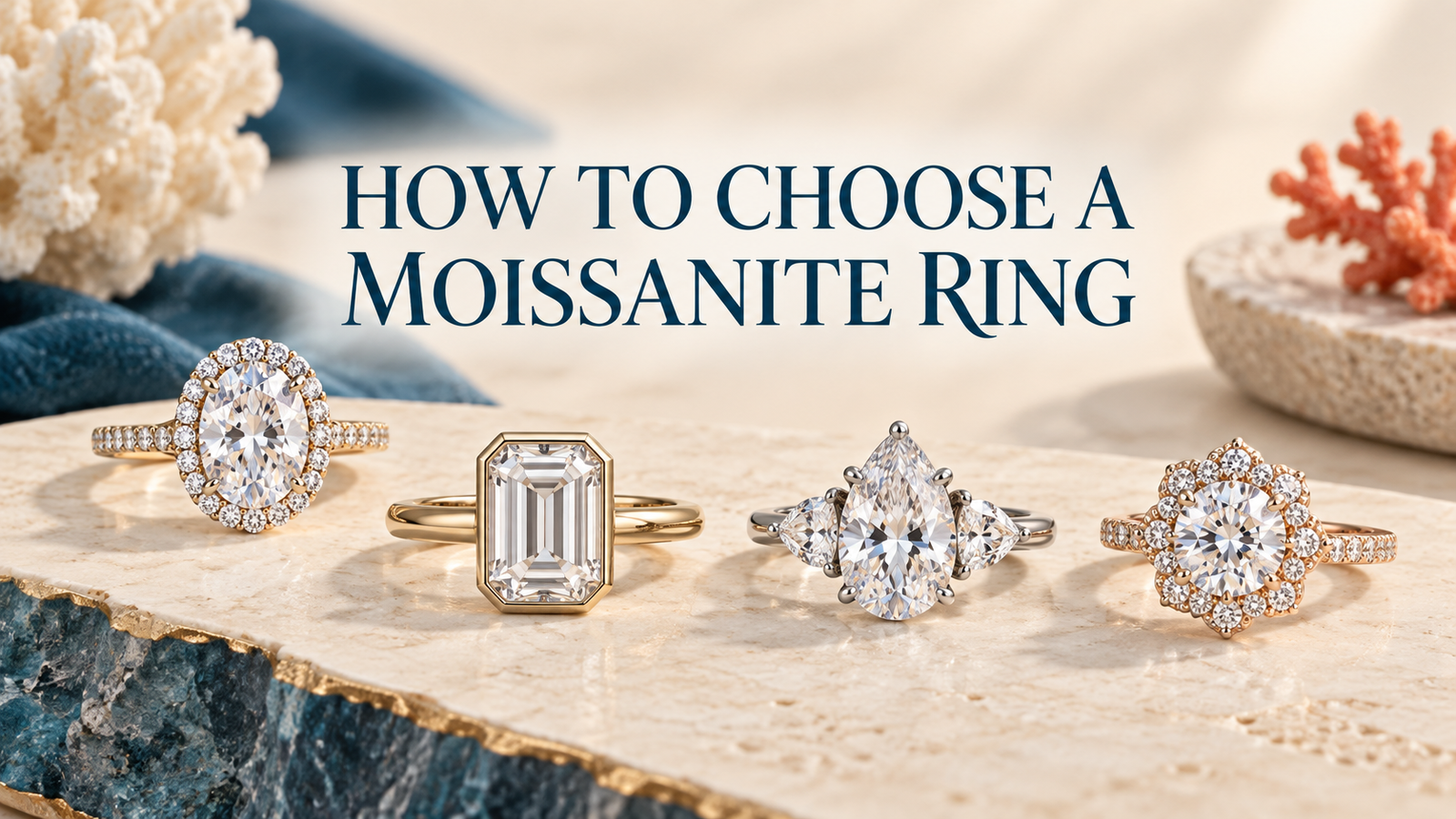
    How to Choose a Moissanite Ring

    The easiest way to choose a moissanite ring is to decide in this order: shape, setting, center-stone size, lifestyle, and ring size. Shape sets the personality, the setting changes protection and visual impact, size affects presence, and fit determines whether the ring is comfortable enough to wear. Start with those decisions before comparing small design details.

    The 60-second decision

    • Classic and versatile: choose a solitaire or a clean bezel.
    • More visual sparkle: look at halo or floral-halo styles.
    • Symbolic and dimensional: consider a three-stone design.
    • Active routine or frequent glove wear: prioritize a smoother, lower-profile setting and inspect how much the stone projects above the band.
    • Unsure about fit: confirm the size before ordering instead of relying on a guess.

    1. Choose the stone shape first

    Shape is the outline you notice first. It is different from cut quality: two stones can share the same oval or emerald outline but interact with light differently. For an online purchase, review straight-on and angled images whenever they are available rather than deciding from a single close-up.

    ShapeVisual characterWhat to inspectMSEARTHIA example
    OvalElongated, bright, and softly modernOutline, symmetry, and the way the halo follows the centerOval Moissanite Halo Ring
    Emerald cutGeometric, clean, and understatedStep-facet appearance, corner protection, and bezel proportionsEmerald Cut Moissanite Bezel Ring
    PearDirectional and distinctiveTip protection, symmetry, and preferred point orientationPear Cut Moissanite Three-Stone Ring
    Floral haloRomantic and decorativeOverall width, accent-stone layout, and cleaning accessFloral Moissanite Halo Ring

    Pointed shapes such as pear cuts deserve special attention at the tip. GIA notes that pointed outlines benefit from a secure setting that helps protect vulnerable corners or points. That does not make a pear shape impractical; it simply makes the mounting part of the buying decision.

    2. Match the setting to your routine

    A setting is not only a style choice. It is the structure that holds the center stone and affects the ring’s profile, snag potential, cleaning needs, and visual footprint. GIA distinguishes the stone-holding method—such as prongs or a bezel—from the broader style, such as solitaire, halo, or three-stone.

    Bezel

    A rim of metal surrounds the stone’s edge. The smooth outline can be practical for people who dislike exposed prongs or frequently catch rings on clothing. A bezel also gives an emerald-cut stone a particularly clean, architectural look.

    Halo

    A frame of smaller stones surrounds the center and increases the ring’s overall sparkle and visual spread. More small stones also mean more places where lotion or debris can collect, so plan for careful cleaning and periodic inspection.

    Three-stone

    A center stone is flanked by two side stones. The design creates width across the finger and a layered look without relying on a complete halo. Check how the side stones sit beside the center and whether the profile suits your daily routine.

    3. Think in visual presence, not carat alone

    Carat is a weight measurement, not a guaranteed face-up dimension. Shape, proportions, halo width, side stones, and band design all change how large a ring looks from above. This is why a 2 ct center stone in a bezel can present differently from a 2 ct center in a halo.

    Use the option selector on the product page to see which center-stone sizes and ring sizes are actually offered. For example, the Oval Moissanite Halo Ring currently offers 1 ct, 2 ct, and 3 ct center-stone choices, while the Floral Moissanite Halo Ring offers 1 ct and 2 ct choices. Availability and price can change, so rely on the live product selector rather than a saved screenshot.

    4. Verify material wording and product details

    Moissanite is its own gemstone material; it is not diamond. GIA describes synthetic moissanite as very hard and durable, with strong fire and brilliance, while also noting that its optical behavior differs from diamond. The U.S. Federal Trade Commission’s Jewelry Guides emphasize truthful disclosure of gemstone type, metallic content, size, treatment, and other material facts. For a property-by-property comparison of the two materials, see Moissanite vs Diamond: Brilliance, Durability, Price and Care.

    Read the individual product description for the exact stated material. Do not infer solid gold from a color name. On MSEARTHIA, a finish described as “white gold tone” or “champagne gold tone” describes appearance, not solid-gold content. The Emerald Cut Moissanite Bezel Ring, for example, states S925 sterling silver in its product details.

    5. Confirm ring size before ordering

    A beautiful ring that spins, pinches, or cannot pass the knuckle is not the right choice. Finger size can vary with temperature and time of day, and a wider band can feel different from a narrow one. If you have a ring that already fits the intended finger, compare its inside diameter with a reliable size chart. For an important purchase or an uncertain measurement, ask a jeweler to confirm the size.

    Use the available size options on each product page and contact MSEARTHIA before ordering if you need help with half sizes or a fit question. Do not choose a size based only on a printable guide unless the print scale has been checked.

    A practical shortlist

    Frequently asked questions

    Is moissanite a diamond?

    No. Moissanite and diamond are different gemstone materials with different optical and physical properties. Product descriptions should identify moissanite clearly rather than present it as diamond.

    Which ring setting is best for an active lifestyle?

    A smooth bezel or another lower-profile, well-protected setting can reduce snagging, but no ring is immune to impact. Compare the full profile, not only the top view, and remove fine jewelry for activities that could strike or crush the setting.

    Does a halo make a center stone look larger?

    A halo increases the ring’s overall visual footprint and frames the center, which can make the complete design look larger. It does not change the actual weight or dimensions of the center stone.

    Should I choose a ring by carat weight?

    Use carat as one comparison point, not the only one. Shape, proportions, setting, halo, side stones, band width, and finger coverage all affect how the finished ring looks.

    Related reading: if you are still weighing moissanite against diamond, see Moissanite vs Diamond: Brilliance, Durability, Price and Care for a full comparison of fire, hardness, price and care.

    Sources and methodology

    This guide combines MSEARTHIA’s live product descriptions and option sets, checked on September 28, 2026, with general gemological and consumer-advertising guidance. Product availability may change; verify the live product page before ordering.