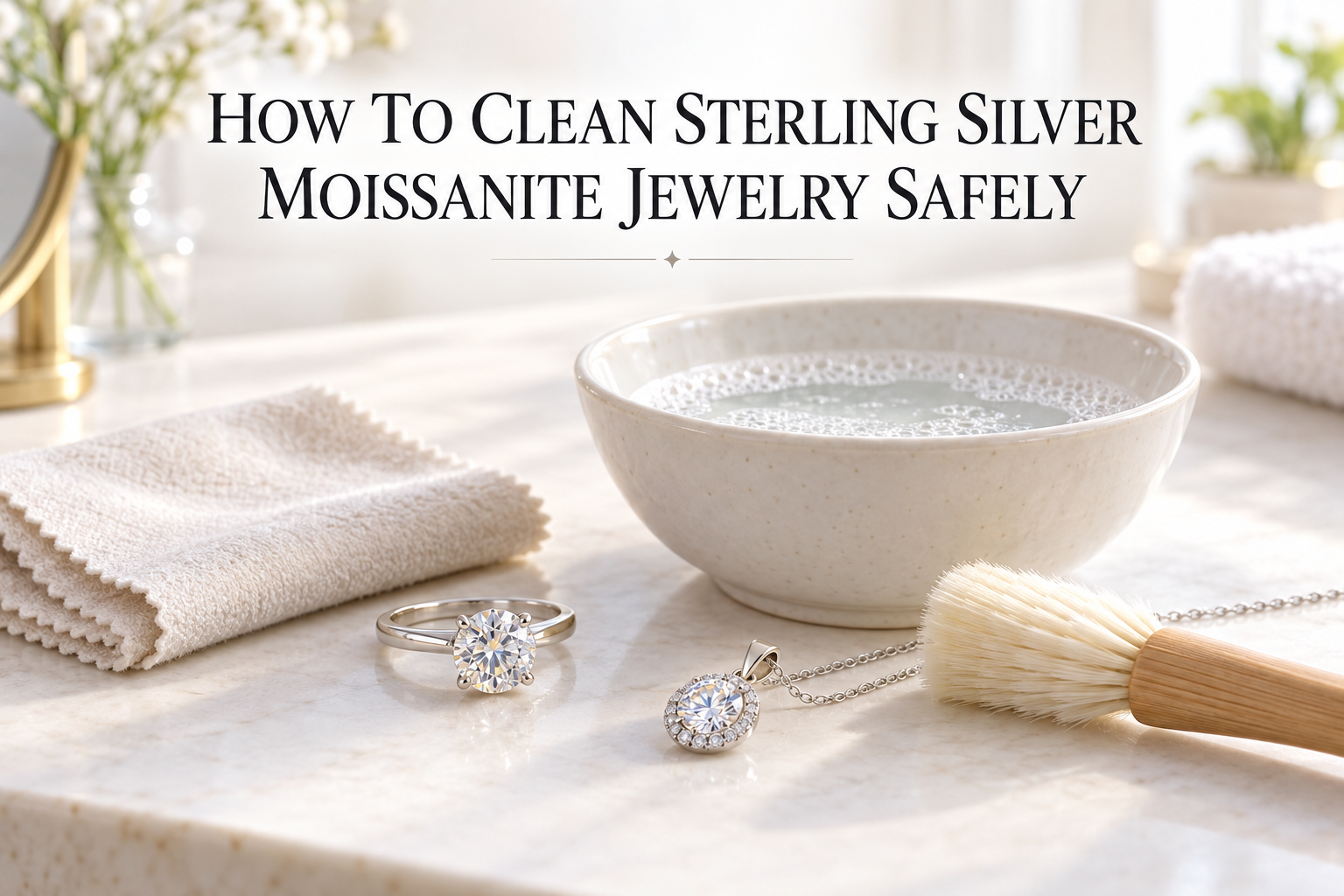
For routine cleaning, soak sterling silver moissanite jewelry briefly in lukewarm water with a small amount of mild dish soap, brush gently with a very soft brush, rinse carefully and dry completely with a lint-free cloth. Check the product’s plating and construction first, because a method that is gentle on moissanite may still wear a plated or delicate silver surface.
Safe routine at a glance
- Confirm the metal, plating and setting.
- Prepare lukewarm water with a few drops of mild dish soap.
- Soak briefly, then brush gently around and behind the setting.
- Rinse in a bowl or with the drain securely closed.
- Pat dry and let the piece dry completely before storage.
- Stop if a stone moves, a prong catches or plating appears damaged.
First identify what you are cleaning
Moissanite and sterling silver need to be considered separately. Moissanite is a hard gemstone material. Sterling silver is the softer metal that holds it, and that silver may have a rhodium, yellow-gold or rose-gold surface layer. The safest routine protects the most delicate part of the complete piece, not only the stone.
If a listing only says “silver tone,” do not assume the base is sterling silver. If the piece is S925, do not assume it is unplated. Read Sterling Silver and Moissanite Jewelry: A Practical Buying Guide if you need help separating the stone, base metal and finish.
What you need
- A small bowl of lukewarm water
- A few drops of mild, lotion-free dish soap
- A very soft toothbrush or jewelry brush
- A clean lint-free or microfiber cloth
- A second bowl of clean water for controlled rinsing
Use separate bowls for small earrings, pendants and rings. That reduces the chance of losing a piece down the drain. Clean one item at a time so chains do not tangle and stones do not rub against one another.
Step-by-step cleaning method
1. Inspect before soaking
Look at the prongs, bezel edge, clasp and any small accent stones. Gently touch the setting with a fingertip; do not pull or twist it. If a stone moves, a prong looks lifted or a clasp is failing, stop and have the piece inspected instead of cleaning it at home.
2. Mix a mild solution
Add a few drops of mild dish soap to lukewarm water. Hot water is unnecessary, and extreme temperature changes are not worth the risk. Avoid soaps with grit, bleach, strong fragrance, lotion or unknown polishing additives.
3. Soak briefly
A short soak helps loosen skin oil, soap film and lotion around the stone. Do not leave plated jewelry sitting in solution for long periods. If the piece uses glue, enamel, porous gems or another treatment, follow its specific care instructions instead of this general method.
4. Brush with light pressure
Use the soft brush behind the moissanite and around the setting, where residue blocks light and reduces visible sparkle. Support the piece in your hand rather than pressing it against a hard counter. Let the bristles and soap do the work.
5. Rinse and dry completely
Rinse in a clean bowl or over a closed, covered drain. Soap left behind can create a dull film. Pat the jewelry dry with a lint-free cloth, then allow hidden areas around the setting and clasp to air-dry before storage.
What not to use
| Avoid | Why | Safer alternative |
|---|---|---|
| Toothpaste or baking-soda paste | Abrasive particles can scratch silver or wear plating | Mild soap and a soft brush |
| Bleach or chlorine cleaner | Harsh chemicals can attack metals and finishes | Remove jewelry before cleaning or swimming |
| Paper towels or rough cloth | Fibers and abrasive texture can mark polished surfaces | Lint-free microfiber cloth |
| Hard scrubbing | Can stress prongs and thin surface finishes | Light pressure and repeated gentle rinsing |
| Unknown silver dip | May be unsuitable for plating, stones or darkened details | Use only a product approved for the exact construction |
What about polishing cloths?
A cloth made for unplated sterling silver can remove surface tarnish, but some polishing cloths are treated with compounds that also remove a tiny amount of metal. Use light pressure and follow the cloth maker’s instructions. Do not aggressively polish gold- or rhodium-plated areas because repeated rubbing can wear the finish.
For a ring with an intentional darkened or oxidized detail, a silver polish may change the design. When construction is uncertain, a jeweler can clean the piece without erasing the finish you meant to keep.
Are ultrasonic and steam cleaners safe?
GIA lists ultrasonic and steam cleaning as safe for synthetic moissanite itself. That does not automatically make either method safe for the complete piece. Loose settings, solder joints, plating, accent stones, adhesives and previous repairs can change the answer.
For routine home care, mild soap and a soft brush are the lower-risk choice. If a deeper clean is needed, ask a jeweler to inspect the setting first and choose a method for the entire piece rather than the center stone alone.
Tarnish versus a dull stone
Tarnish changes the metal surface, often making sterling silver look darker or less bright. A dull-looking moissanite is more often covered by oil, soap or cosmetic residue. Cleaning the stone can restore sparkle, while tarnish on the silver may need a metal-appropriate cloth or professional service.
The Green Moissanite Halo Ring and Emerald Cut Moissanite Bezel Ring both identify S925 sterling silver in their live product details. Their halo and bezel constructions create different cleaning access: a halo has more small spaces, while a bezel has a continuous metal edge that should be brushed gently.
How to keep it cleaner between washes
- Put jewelry on after lotion, fragrance, makeup and hair products.
- Remove it before swimming, showering, cleaning, exercise or work that could strike the setting.
- Wipe the piece gently after wear.
- Store it dry in a separate soft pouch or lined compartment.
- Keep sterling silver away from harder jewelry that can scratch it.
- Inspect prongs, clasps and stones periodically, especially after an impact.
Frequently asked questions
Can I use dish soap on sterling silver moissanite jewelry?
For most securely set pieces, a small amount of mild dish soap in lukewarm water is a practical routine. Check for plating, adhesives and other stones first.
Why does my moissanite look cloudy?
Skin oil, soap, lotion and hard-water film can reduce sparkle. Gentle cleaning usually removes that surface buildup. If the appearance does not improve, have the stone and setting inspected.
Can I use toothpaste to clean sterling silver?
It is better not to. Toothpaste can contain abrasive particles that scratch silver or wear a plated finish. Use mild soap, a soft brush and a suitable lint-free cloth.
How often should I clean it?
Clean when visible film or reduced sparkle appears rather than following a rigid schedule. Frequent wear, lotion and cosmetics can make cleaning necessary sooner. A gentle wipe after wear reduces buildup.
Should I remove sterling silver jewelry before showering?
Removing it is the lower-risk habit. Soap, shampoo, repeated moisture and friction can dull the surface or affect plating, and drying hidden areas around a setting is harder after a shower.
Related reading: see Sterling Silver and Moissanite Jewelry: A Practical Buying Guide for S925 and plating terms, and Moissanite vs Diamond for a broader comparison of material properties and care.
Sources and methodology
This guide uses GIA care guidance for jewelry, synthetic moissanite and storage, plus FTC guidance on sterling-silver descriptions. Product construction and availability were checked against live MSEARTHIA pages on September 29, 2026. The routine is deliberately conservative because the complete setting can be more sensitive than the moissanite itself.