Author: MSEARTHIA Admin

  • When to Have Your Ring Prongs Checked

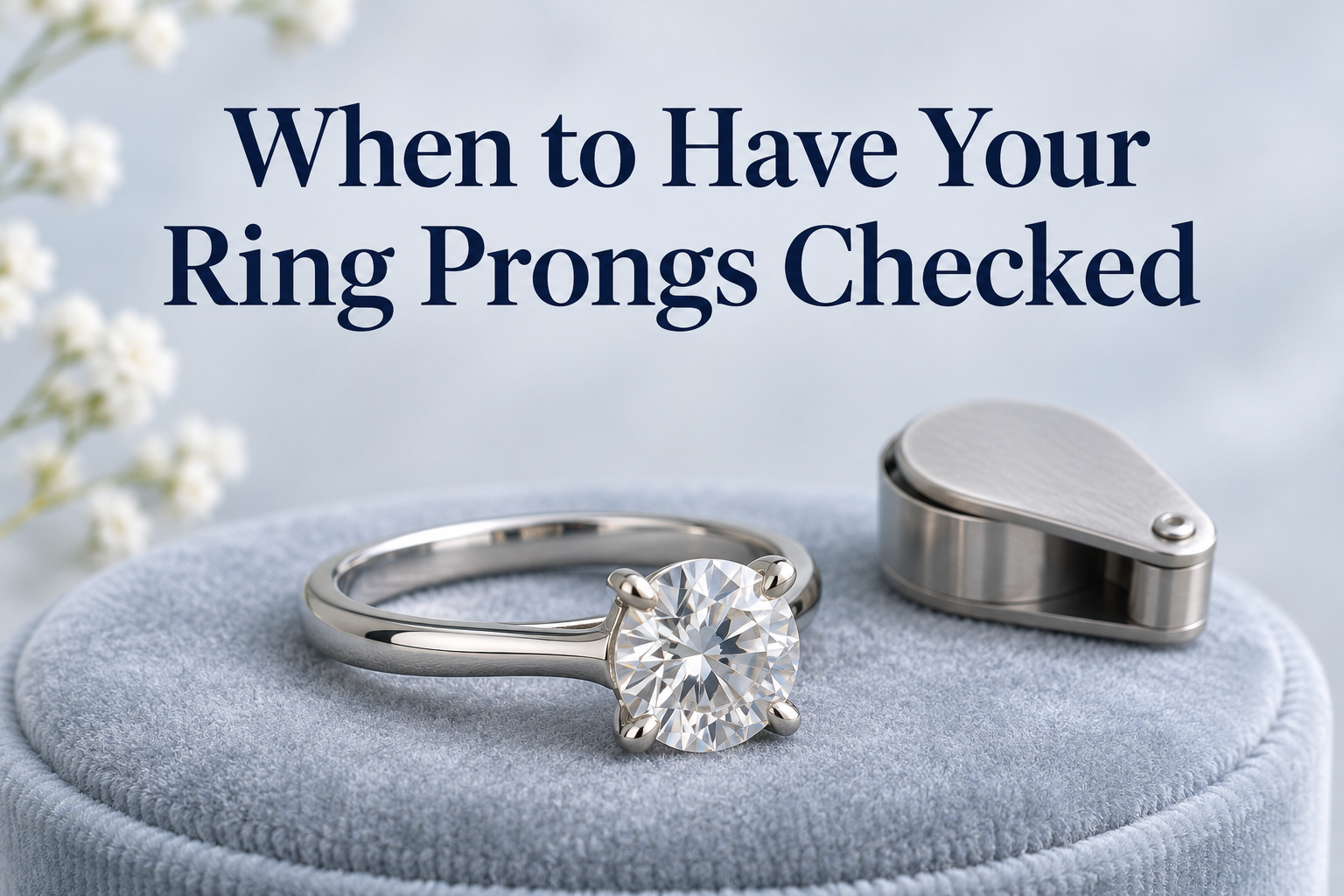
    When to Have Your Ring Prongs Checked

    Have your moissanite ring checked if a prong looks bent or missing, a stone appears to have shifted, or a setting starts snagging where it used to feel smooth. Take the ring off and keep it in a padded compartment until a jeweler can examine it. After a hard knock to the setting, arrange a check even if you see little from the top.

    Look for a change you can describe

    Set the ring on a soft surface in good light. Look from above and from the side, and compare what you see with an earlier photo of your own ring if you have one. Tell the jeweler where the ring caught or where the knock landed. A photo can help describe the change. A close inspection is needed to tell whether the stone is secure.

    Leave the setting as you found it. Skip pushing the stone, testing it on fabric or bending a prong back with tools. For a ring with accent stones, ask the jeweler to check them as well as the center. A loose accent may be harder to spot in a photo than a tilted center stone.

    Bring the setting details you have

    The Pear Cut Moissanite Three-Stone Ring is an example of a listing that tells you the center shape and stone arrangement. Bring the exact order option and any clear side photos so a jeweler can see how each stone is held. If you are comparing a different setting before buying, the Emerald Cut Moissanite Bezel Ring is explicitly described as having a bezel and an S925 sterling silver setting. Ask about care for that specific construction.

    Use the setting comparison to tell the stone arrangement from the way the stones are held. When comparing a style in the ring collection, ask how often a jeweler recommends inspecting it for your wear habits. Keep the order details and a clear side photo so you have a reference later.

    Sources and image note

    GIA’s setting guide discusses professional inspection of prongs and pavé. Its bench guidance on loose stones explains why early inspection matters and why tightening is a jeweler’s job. The cover is an AI-generated editorial illustration of a prong setting and inspection tool.

  • A Green Pendant for Opening Night

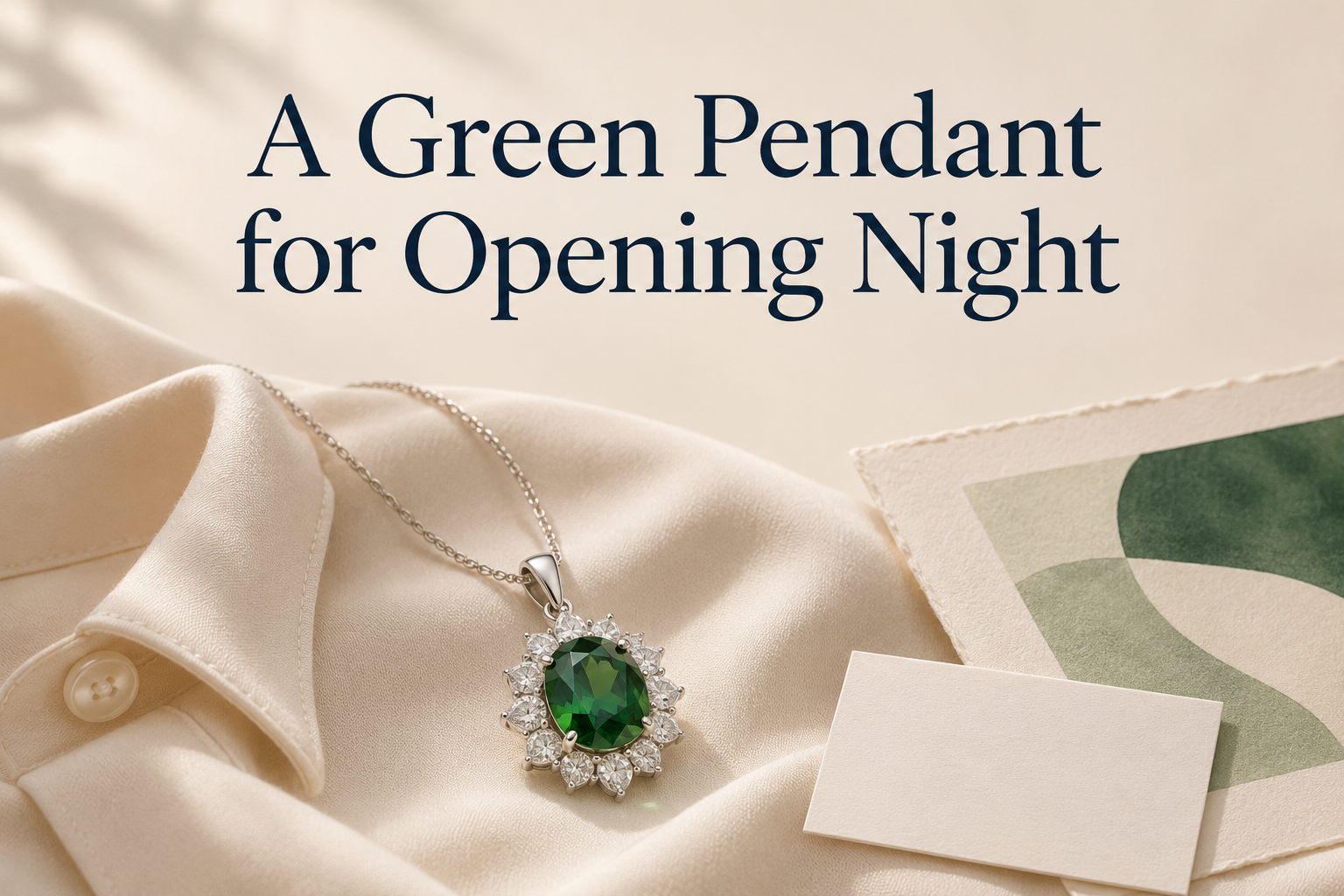
    A Green Pendant for Opening Night

    For your first exhibition opening, try a green moissanite pendant with a cream blouse and dark trousers. Use the neckline you plan to wear and choose a chain length that keeps the pendant where you want it while you talk and move around.

    Imagine the hour before a small exhibition opens. The labels are up, a friend is on the way, and you still need to change out of the clothes you wore to hang the work. In this illustrative scene, you reach for a blouse you already know well. The pendant is the one detail you picked for the evening.

    Check the outfit before the doors open

    Button the blouse as you intend to wear it, add the pendant and step back from the mirror. If you like the green best against bare skin, see where it lands in the open neckline. If you prefer it over fabric, give the floral outline room against a plain panel. Turn your head, reach for a bag and put on the jacket you plan to bring. Those movements show whether the pendant stays visible where you want it. The pendant chain and fit checklist has a method for comparing that placement with a necklace you own.

    Choose the detail you want to remember

    The green moissanite floral halo pendant gives this scene its color and flower-shaped frame. The listing identifies a green pendant and chain option. Ask for the chain length, pendant dimensions and component metals if you need those details to plan the fit. If you would rather wear a smaller shape you already own, try that with the same outfit. For a different silhouette, compare the necklace collection.

    If the pendant is a gift to yourself, keep the opening card or write the date and the name of the first piece you hung. That gives you something specific to remember the next time you wear it. When you take the necklace off, place it in its own pouch or padded compartment so it stays separate from other pieces.

    Sources and image note

    The product listing supports the design details. The storage suggestion follows GIA’s jewelry care guidance. The cover is an AI-generated editorial illustration of the outfit and setting.

  • Lost One Earring? Match It or Start Fresh

    Lost One Earring? Match It or Start Fresh

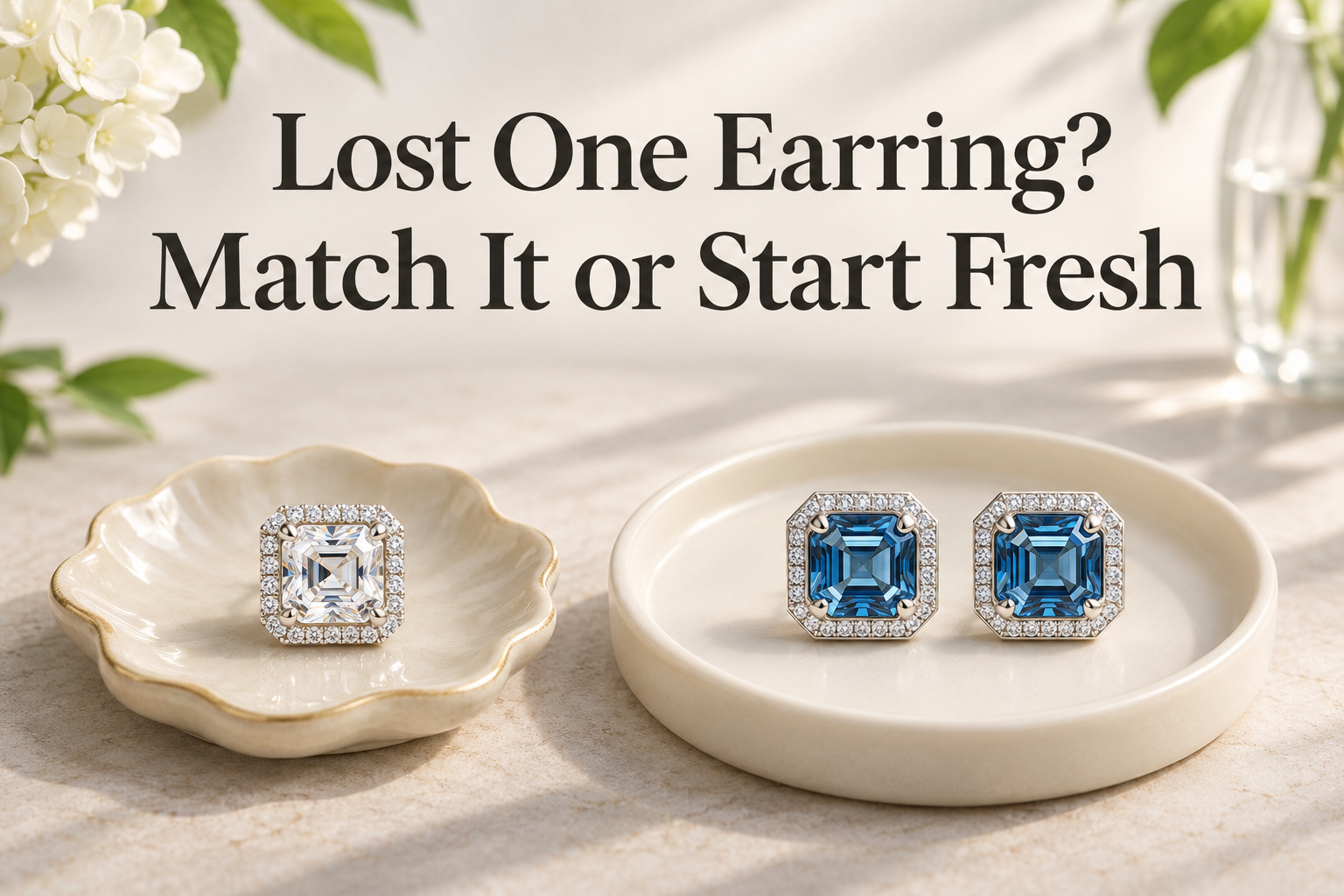
    If you lost one moissanite earring, check your original order and ask whether the exact option can be supplied as a single. If the match is uncertain, save the remaining earring and decide whether you would enjoy a different design. Confirm the number of earrings supplied before ordering.

    Use these two paths as an editorial choice guide. Start with the reason you liked the original pair. The color may matter most, or you may want the same outline and backing because you already know how they sit.

    Choose a match if the pair matters

    Find the original product link, order description and selected option. Compare the surviving earring from the front, side and back. Include the stone outline and color, outer dimensions, finish and fastening in your question. A jeweler or seller may need more than a front photo to assess the match.

    I have one earring from this order. Can this exact option be supplied as one earring? Please confirm the overall dimensions, color and finish, fastening and how many pieces the order would contain.

    Wait for the seller to confirm availability and the match. If you prefer to keep the original together, store the remaining earring in its own protected compartment while you decide. GIA jewelry care and storage guidance.

    Choose a fresh design if the outline or color matters more

    For a squared outline, the geometric halo studs are described as having a cushion-cut look with a bright halo. If you want a stronger color accent, the blue Asscher-cut design uses blue centers with geometric frames. Compare them as separate design options. View the Geometric Halo Moissanite Stud Earrings or view the Blue Asscher-Cut Moissanite Stud Earrings.

    Before ordering either style, confirm the selected option, the number of earrings supplied and the relevant metal and backing details. A carat label alone gives you too little information to compare the outer dimensions or count. Check the carat and millimeter guide for the measurements to request.

    Make the decision before you order

    • Exact match confirmed. Compare the confirmed single with your remaining earring before deciding.
    • A new design appeals to you. Save the selected option and the confirmed contents in your jewelry wish list.
    • Questions remain open. Give yourself time to ask, or compare the earring collection and the studs and drops guide.

    The cover is an AI-generated editorial illustration of the two choices. Confirm replacement availability and order contents with the seller.

  • A Red Cord Bracelet with a White Shirt

    A Red Cord Bracelet with a White Shirt

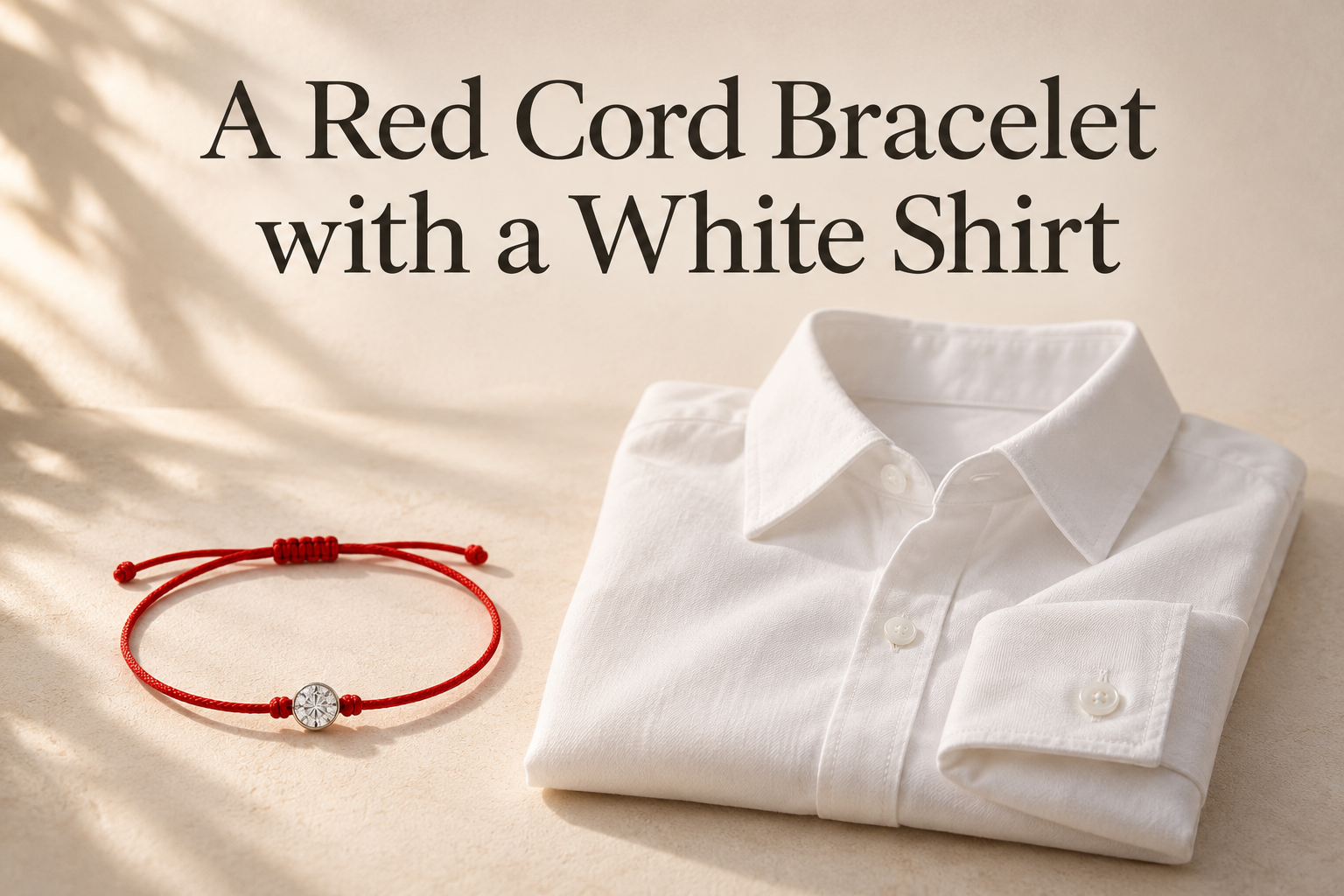
    Wear a red cord moissanite bracelet with a white shirt by giving the cord a small strip of visible wrist. Try the shirt cuff at its usual length first. If you want more color to show, try one loose fold and check how the cuff and bracelet sit as you move.

    Imagine setting out a white button-down and dark trousers for an afternoon out. The red cord is a single color accent beside the white fabric. This is an illustrative styling scene you can try with pieces you already own.

    Start with the cuff down

    Button the sleeve where it sits comfortably and let your arm hang naturally. You might see only a short line of red at the edge. If the bracelet disappears when the sleeve falls, decide whether you like that quieter effect. The outfit can stay simple even when the detail comes in and out of view.

    Try one loose fold

    Fold the cuff back once if the shirt allows it. Give the stone and the red cord a little space in the outfit. Try reaching for a bag or sitting at a table and see whether the sleeve presses the bracelet or catches at its fastening. If it does, adjust the sleeve or give the bracelet a different outfit.

    Keep the rest of the palette familiar. White, dark denim and red make one simple combination. If you already wear a watch, compare the two pieces on separate wrists using the bracelet and watch styling guide.

    The bracelet behind the scene

    The current product description identifies a round moissanite center and an adjustable red cord. Ask for the usable adjustment range, fastening details and component metal if those affect your choice. The style menu uses Gold and White Gold names. Check the actual material separately with the guide to jewelry finish labels. View the Red Cord Moissanite Tennis Bracelet.

    Use the bracelet size guide to compare your wrist measurement with the available fit information. If you prefer a continuous line of stones or another type of closure, explore the bracelet collection.

    Keep the bracelet in a separate pouch or padded compartment when you take it off. This general storage advice comes from the GIA jewelry care guide.

    The cover is an AI-generated editorial illustration. Use the linked listing for current product details and the actual piece to assess fit.

  • A Moissanite Wish List That Leaves Less Guesswork

    A Moissanite Wish List That Leaves Less Guesswork

    Build a moissanite jewelry wish list by saving the exact product link, naming the design you like and recording the selected option only when you know it. Keep fit, materials and other unanswered questions visible. A simple text note is enough; the list can guide a conversation without becoming permission for someone to place an order.

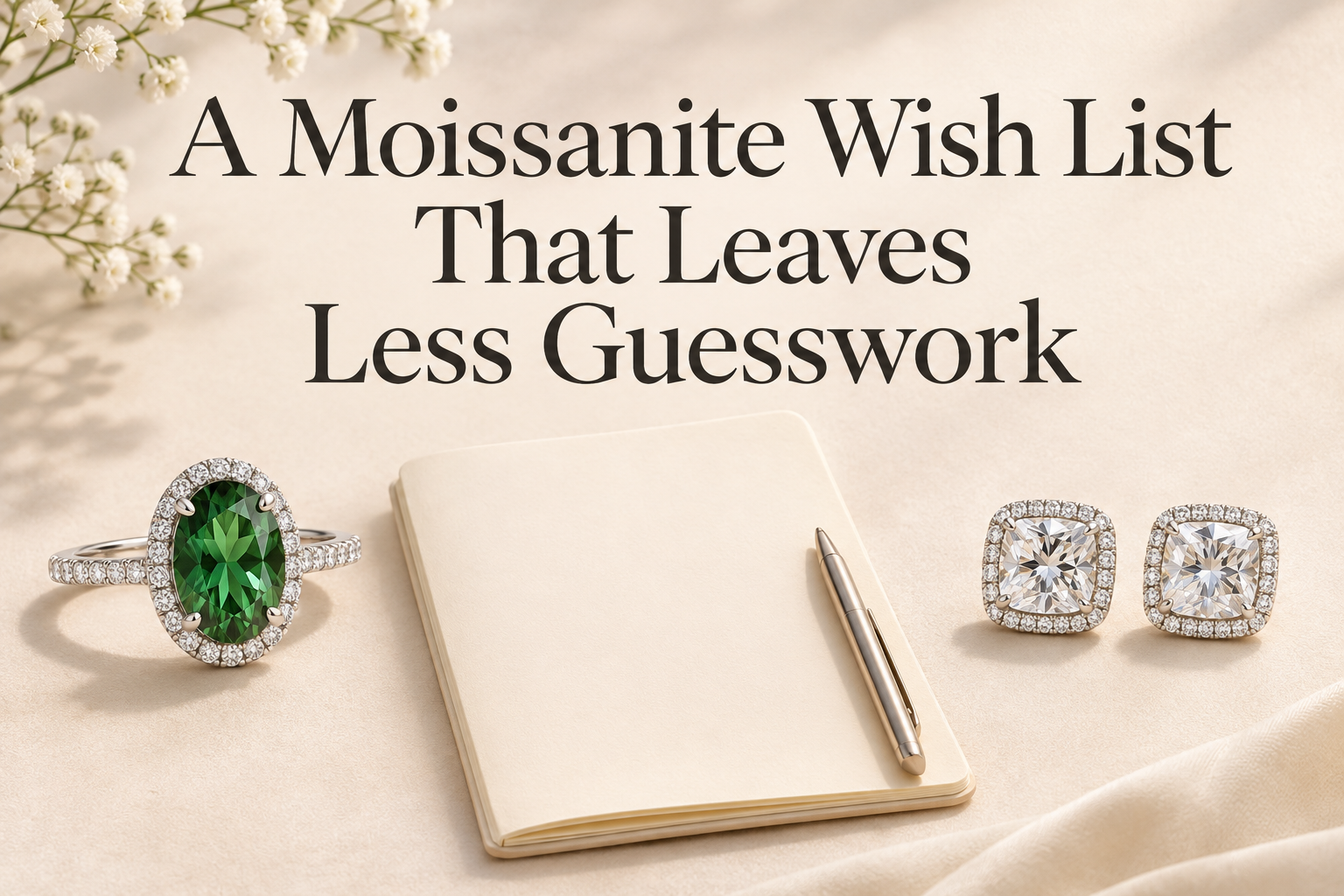
    This is an editor’s selection exercise, not a customer submission, a tested product ranking or an order placed on your behalf. Choose one route below if it matches what you actually want. There is no target number of pieces and no need to add a second category just to make the list look complete.

    Pick the reason you saved the piece

    Write one concrete preference: an oval green center, a geometric outline or jewelry that sits at your ears rather than your hands. “I like this shape” gives a helper more direction than a screenshot alone. It also helps you see whether several saved pictures are alternatives to one another rather than several things you want to buy.

    Then mark whether the exact design matters. If a substitute is welcome, explain which feature you want to keep and which can change. If you want to choose the final piece yourself, say that. A list does not have to preserve a surprise that makes the practical decisions harder.

    Route one: a green ring, with the finger still to confirm

    The Green Moissanite Halo Ring is one specific entry to consider if you want an oval green moissanite, halo and pavé band. Its current description explicitly states S925 sterling silver, with listed 1 ct or 2 ct center options and US sizes 4–9. Those are useful listing details, not independent measurements or proof that every option is available.

    Your note can identify the green oval as the preference while leaving the center option and size unresolved. Do not turn a ring worn on another finger into a guessed size for this one. Use the ring-size guide and confirm the intended option; ask for millimeter dimensions if visual coverage matters. The carat-label guide explains that separate question.

    Example wish-list entry: I like the Green Moissanite Halo Ring for its oval green center and halo. I have saved the product link. My intended finger and final size still need confirmation, and I have not chosen between the listed center options. Please ask me before ordering or substituting another design.

    Route two: geometric studs, with material questions attached

    The Geometric Halo Moissanite Stud Earrings offer a different selection route: a square cushion-cut look framed by a halo. Their current description supports that design, but does not establish post-and-back metal, exact dimensions, weight or fastening. Do not copy the ring’s S925 statement into this entry because both pieces look silver-colored.

    If those specifications affect whether you can wear the earrings, keep them as conditions to resolve before purchase. Confirm the selected option and supplied contents rather than translating an unclear carat string into a size or count. Our earring buying guide covers the practical comparison.

    Example wish-list entry: I like the Geometric Halo Moissanite Stud Earrings for the squared halo outline. Before buying, please confirm the selected option, supplied count, dimensions, weight, closure and relevant metals with me. I have not approved a substitute or treated the photo as a material specification.

    Keep five fields with each saved link

    • Exact product: title and current link, rather than only a cropped picture.
    • What you like: the shape, color or jewelry category that led you to save it.
    • Option status: what is chosen and what remains undecided.
    • Open questions: the fit, construction or material facts needed before ordering.
    • Decision boundary: whether you want to choose together, approve a substitute or wait.

    For rings, browse rings; for a face-level detail, compare earrings. Save fewer entries if that is clearer. If wristwear is what you really want, the bracelet-and-watch scene can help you describe the wearing plan, while the clasp article identifies a construction question to include.

    Review the entry before it becomes a purchase

    A saved entry records your preference at one point in time. Recheck the current description, chosen option, price, availability and relevant written terms before anyone pays. A link is not a stock reservation, delivery promise or guarantee that a gift can be resized or returned. If it is for another person, ask whether choosing from a list is welcome; our friend-gift guide explores that conversation.

    It can also help to include a care question when a finish or component is unspecified. GIA’s general guidance explains why construction matters to chemical exposure and cleaning choices; it does not identify the material of an item from a photograph. Ask for the selected piece’s care instructions rather than adding an unverified “easy care” promise to your list.

    Sources and editorial method

    Live linked MSEARTHIA descriptions were checked before publication. The two entries are editable editorial examples, not customer requests, a purchase recommendation based on a survey or a claim that a special wish-list service is supplied. GIA’s jewelry-care guidance supports the narrow chemical/cleaning context, not product certification or composition verification.

    The cover is an AI-generated editorial illustration of alternative entries. It is not an exact product photograph, a supplied set or notebook, a size comparison or evidence that an order has been placed.

  • A Moissanite Bracelet with Your Everyday Watch

    A Moissanite Bracelet with Your Everyday Watch

    To try a moissanite bracelet with a watch, start with the watch you already wear and consider the bracelet on the other wrist. Check the actual fit, fastening and sleeves before adding anything else. Separate wrists offer a way to explore the look without deliberately stacking the pieces against each other; they do not guarantee comfortable or damage-free wear.

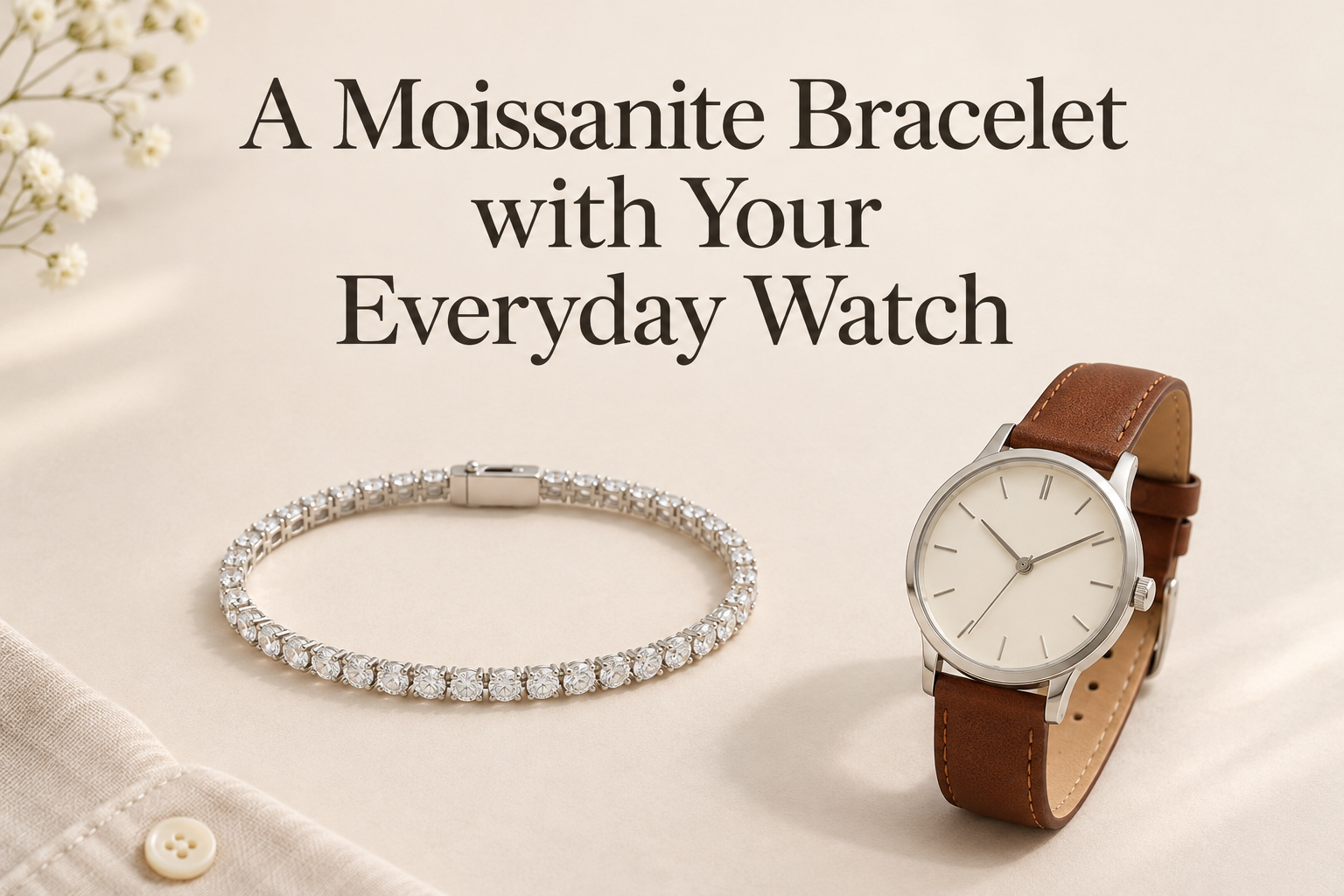
    Imagine getting ready for an ordinary afternoon. The watch is already part of the outfit; the new question is whether you want one additional detail. This is an illustrative editorial scene, not our own try-on, a customer diary or a test of a particular watch and bracelet combination. You can use an existing bracelet to explore it first.

    Leave the familiar watch in the picture

    Begin with your usual shirt and the watch as you normally wear it. A brown strap, metal bracelet or dark watch face does not create an obligation to buy matching jewelry. Keep the watch because you like or use it, then assess the extra piece with the whole outfit rather than comparing two close-up photographs.

    For the first version of this scene, leave the watch wrist as it is. Consider the other wrist for the jewelry. You might enjoy having the two details in different places, or decide that the watch is enough. There is no requirement to make the second wrist look equally full.

    One continuous line as the design reference

    The Four-Prong Moissanite Tennis Bracelet supplies the visual direction: its current description identifies round moissanite stones in four-prong settings forming a continuous line. In this example, that repeating outline is a contrast to a watch dial, not an attempt to duplicate it.

    The checked description does not establish the finished length, clasp construction or metal composition. We therefore do not describe the bracelet as S925 or promise that it will sit comfortably beside any watch. Confirm the selected item’s fit and use the bracelet-size guide for the measurement questions. Our clasp checklist covers the fastening information to request separately.

    Let the sleeve make the next decision

    Imagine a plain shirt with a cuff that sits as you normally wear it. Try the outfit with your arms relaxed, then notice where the real bracelet, watch and fabric meet during ordinary movement. A photograph cannot establish whether the cuff presses a clasp, catches a setting or changes how the watch sits.

    If the combination repeatedly catches, presses or needs readjusting, change the outfit or leave the bracelet off. Do not roll a sleeve tighter just to reproduce an image. This styling scene does not establish compatibility with gloves, work equipment or an activity that restricts jewelry; follow those requirements when they apply.

    What if you prefer both on one wrist?

    That is a different combination to assess with the actual pieces. There is no universal safe gap, extra length or wrist order supplied by this article. Do not assume a soft-looking strap, polished finish or stone setting makes contact harmless. Ask the relevant seller or jeweler about the construction if you want to wear the pieces together.

    You can keep the same visual idea across separate wrists instead. A stone-set line and a familiar dial can share an outfit without sharing a stack. Our mix-and-match article discusses how an intentional combination can include different shapes and visible tones, while keeping practical specifications separate.

    Keep the option you would choose again

    In the imagined afternoon, you leave with either the watch alone or one bracelet as an additional detail. Neither answer needs a matching necklace to complete it. Browse bracelets if the design interests you, or write down what you want to confirm before shopping. Our moissanite wish-list guide turns that preference into a clear note rather than a guessed order.

    When removing the pieces, give them separate protected places rather than dropping them loose together. GIA’s general care guidance supports protective storage to reduce exposure to scratching and impact. It does not certify this pairing, identify either item’s materials or establish a wear-test result.

    Sources and editorial method

    Product design details come from the linked live MSEARTHIA description checked before publication. Wrist placement, clothing and the afternoon are editorial suggestions, not an authentic try-on or measured compatibility claim. GIA’s jewelry-care guidance supports the limited storage context only.

    The cover is an AI-generated editorial illustration, not exact product photography, an included watch or set, a scale reference or evidence that either item can be stacked without damage.

  • Moissanite Bracelet Clasps: Ask Before You Buy

    Moissanite Bracelet Clasps: Ask Before You Buy

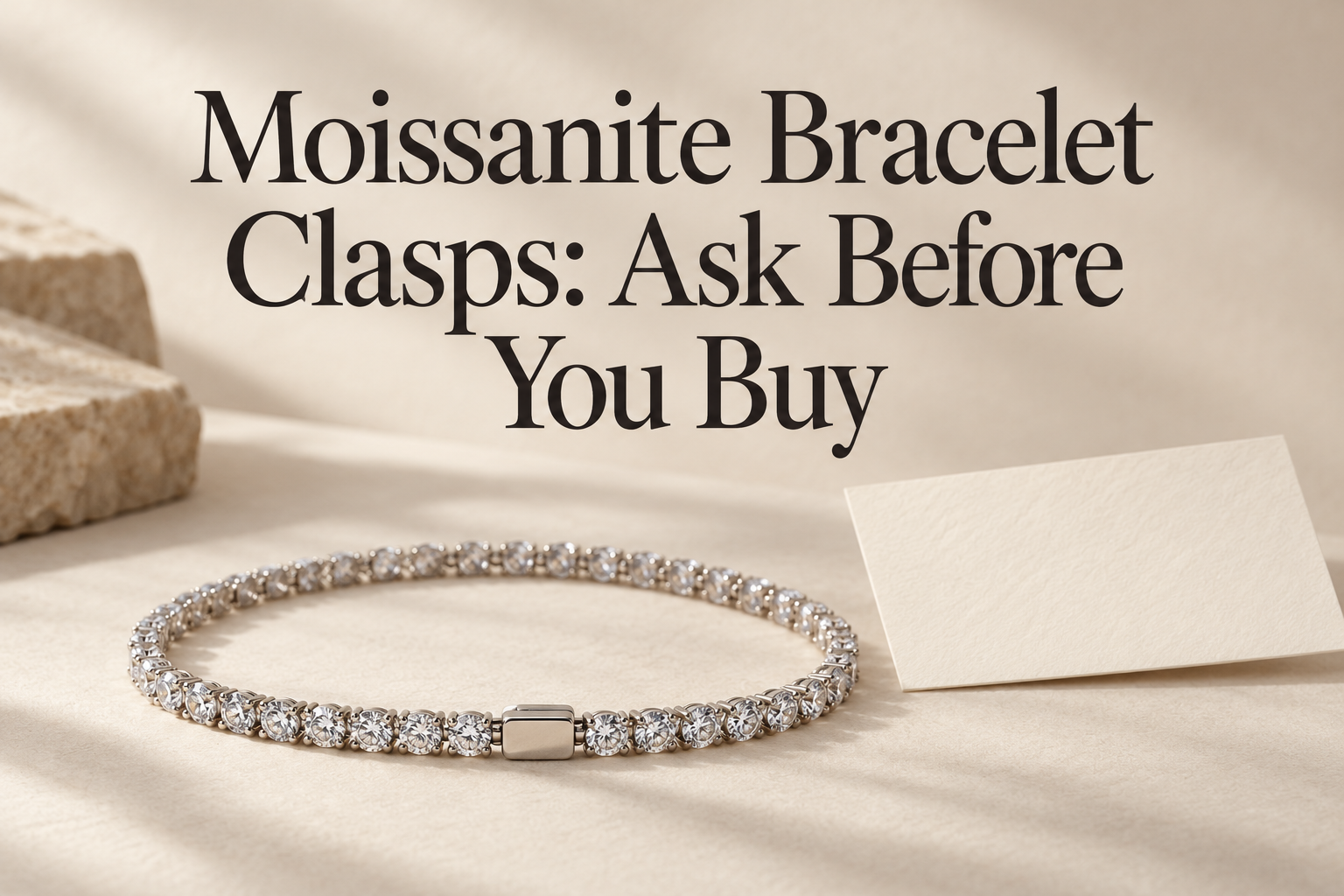
    Before buying a moissanite bracelet, ask the seller to identify the selected item’s clasp or closure, explain its opening and closing action and confirm whether it has a separate safety latch. Request a clear close-up or demonstration if the written description is incomplete. A tennis-bracelet name, a carat label or an attractive front photograph does not answer those questions.

    This guide is about operating information and condition checks, not a strongest-clasp ranking or a pull test. Moissanite identifies the stated stone; it does not specify the mechanism joining the bracelet’s ends. Sizing is a separate decision covered in our bracelet-size guide.

    Separate the closure from the stone setting

    Four-prong describes how an individual stone is held, not how the complete bracelet fastens. Likewise, a continuous row of stones describes a visual arrangement. You still need to identify the parts that connect the two ends and the action required to release them.

    Jewelers of America’s bracelet guide recommends a secondary safety locking device for tennis-bracelet clasps. Treat that as a feature to ask about, not evidence that every item labeled tennis includes one. A main clasp and an additional latch are separate details to confirm; neither establishes a tested resistance to loss.

    A live example: four-prong stones, unspecified clasp

    The current Four-Prong Moissanite Tennis Bracelet description identifies round moissanite stones in four-prong settings forming a continuous line. Its selected style is named Fully Iced Bracelet. That supports the stated design, but the checked description and attributes do not identify a clasp type, release action or secondary latch.

    If this is the look you want, ask for a view of the actual fastening in both its open and closed positions. Ask which part you operate first and whether another latch must be engaged. Do not supply the answer yourself by assuming it is a box clasp, a push button or a particular safety system. The text also does not verify S925 or a finished length; those need their own answers.

    An adjustable cord needs different instructions

    The Red Cord Moissanite Tennis Bracelet describes a round moissanite center and an adjustable red cord. That is a different construction to investigate. The checked text does not establish the adjustment mechanism, usable range or how the selected closure holds its position.

    Ask the seller to show the intended adjustment action rather than assuming any visible cord should be pulled, untied or shortened. “Adjustable” does not mean that every wearer can operate it comfortably or that it fits every wrist. Its gold and white-gold option names do not establish metal composition, either; our finish-label guide keeps that distinction separate.

    A short request with a useful answer

    For this exact bracelet option, please identify the closure and show how it opens and closes. Does it have a separate safety latch? Please include a clear open and closed view and the recommended operating order. For an adjustable design, please show how the adjustment is made and held. Please distinguish confirmed details from anything not specified.

    A helpful reply points to the selected version and its actual parts. A general assurance that the bracelet is secure is less useful than instructions you can follow. If the mechanism remains unclear, pause the purchase or choose a better-documented option from bracelets. A different color menu does not necessarily mean a different fastening, and matching names do not prove identical construction.

    When you have the bracelet in hand

    Follow the instructions for that actual closure rather than a generic click-count or pulling routine. Confirm that its parts meet as described and that any stated secondary latch is engaged. If it sticks, shows an unexpected gap, appears bent or will not remain closed, stop and ask the seller or a qualified jeweler to assess it. Do not force, bend or modify the mechanism to make it behave like the illustration.

    Bvlgari’s care guidance advises against forcing clasps and recommends expert assessment when there are concerns. We cite the limited handling principle, not its product mechanisms, store services or a claim that a MSEARTHIA clasp has the same construction. A home check is not a strength certification or a guarantee against loss.

    Two questions worth keeping separate

    Does a safety latch make any clasp reliable?

    No universal assurance follows from the name. Confirm its presence, correct operation and condition on the selected piece. An additional latch does not resolve a damaged or poorly understood main closure.

    Can I choose by the bracelet’s front photo?

    A front view helps you compare the design, but it may not show the fastening or operating sequence. Ask for the missing view instead of assigning a mechanism from the row of stones.

    Sources and editorial method

    Live linked product descriptions and attributes were checked before publication; unspecified closure details remain unresolved. Jewelers of America supports the limited safety-feature discussion, and Bvlgari supports the narrow do-not-force handling principle. GIA’s general care guidance supports separate protective storage when the piece is removed. None is a test, certification or repair-service promise for these bracelets.

    For a different everyday jewelry scene, see a bookshop afternoon with one pendant. Its necklace illustration also does not establish a supplied fastening or chain configuration.

    The cover is an AI-generated editorial illustration, not an exact product photograph, mechanism diagram, operating instruction or evidence of a supplied clasp, secondary latch or performance test.

  • A Bookshop Afternoon with One Moissanite Pendant

    A Bookshop Afternoon with One Moissanite Pendant

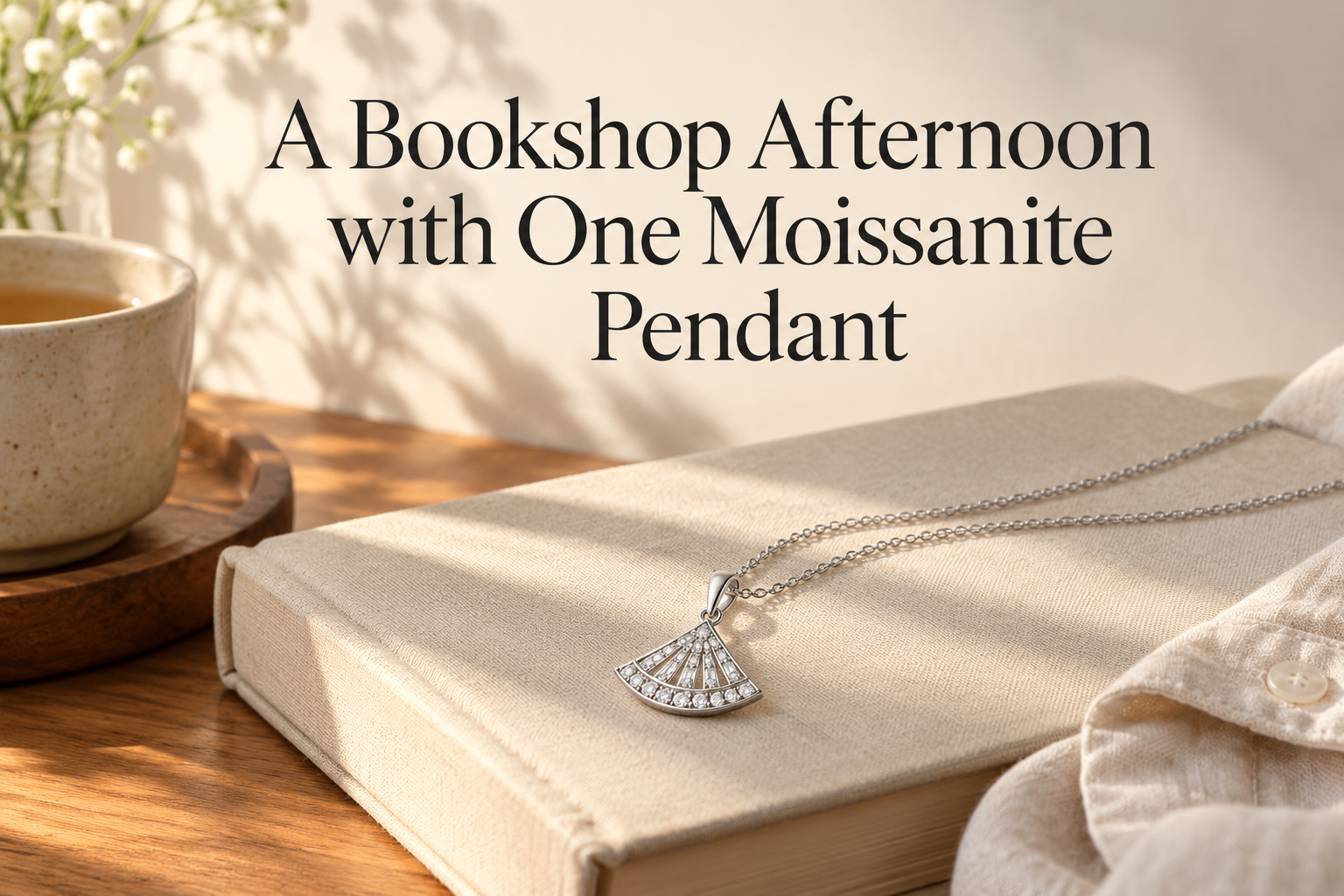
    For a casual bookshop outfit, try one moissanite pendant with clothes you already enjoy. Put the actual shirt or jacket on first, check where the necklace rests and keep the other accessories familiar. The pendant can be a private detail; it does not need to turn an ordinary afternoon into a formal occasion.

    Imagine an afternoon with no dress code and time to browse a few shelves. This is an illustrative editorial scene, not a real visit, a customer’s diary or our own wear test. You do not need to buy jewelry, a new outfit or even a book to use the idea. An existing necklace is a perfectly good starting point.

    Before the door: choose one small detail

    In this scene, the clothes are settled first: a plain shirt, comfortable trousers and the jacket you would take anyway. The pendant is the last choice rather than the reason to replace the outfit. Try it alone at the neckline before deciding whether anything else is needed.

    The Moissanite Fan Pendant Necklace provides the design reference. Its current description identifies a fan-shaped moissanite pendant with a geometric focal point. The spreading outline is the visual idea here, not a promise about how much space it will occupy on your chest. Its “Small Diamond Pendant” option name does not independently establish diamond content; the written description identifies moissanite.

    The checked text does not establish S925, the chain’s included configuration, finished length or exact pendant dimensions. Confirm those before buying a specific necklace arrangement. Our pendant chain and fit checklist helps with those questions. The cover cannot tell you what is supplied or which length to choose.

    At the shelves: the outfit can stop asking for attention

    Picture the necklace as something chosen before you left home, not something you need to keep displaying. It can appear in the opening of a shirt or sit over a plain surface if the real combination works for you. It can also remain partly covered by the jacket. Visibility is optional; you do not need to arrange every layer so another person will notice the jewelry.

    When comparing the outfit at home, include the bag you intend to carry and the collar as you normally wear it. If a strap, fastening or fabric repeatedly presses against the necklace, change the combination or leave the piece off. This scene has not tested snagging, chain strength or compatibility with a particular garment. Do not use a visit as a substitute for resolving an uncomfortable fit.

    The book can be the point

    In the imagined afternoon, you find a place where browsing is welcome and read a few pages. The pendant has no further task. It does not need to communicate that you are a reader, match a book cover or become a social-media photograph. You can like the necklace and still give the rest of the afternoon your attention.

    If you enjoy a different outline, the 1 Carat Moissanite Circle Pendant Necklace offers another reference. Its description identifies a rounded centerpiece, pavé accents and a U-shaped necklace profile. The listed 1 ct label does not provide complete millimeter dimensions or establish an identical chain arrangement to the fan design. Consider it as an alternative, not a second piece you must layer into this scene.

    Back home: keep the useful part of the idea

    You may decide that you like one necklace with a familiar shirt. You may decide that you prefer the shirt alone. Either result gives you a useful next outfit without making a rule for every afternoon. Browse necklaces only if you want another design to consider, not because the scene requires a purchase.

    Place removed jewelry separately in a protected space rather than loose among keys or other pieces. GIA’s care guidance supports that limited storage point; it does not certify either necklace or identify its finish. If a bracelet feels more natural than a neckline detail, our pendant-or-bracelet choice guide offers a different route. Before choosing a bracelet, also read what to ask about its clasp.

    Sources and editorial method

    Design details come from the linked live MSEARTHIA listings checked before publication. The bookshop, clothing and sequence are illustrative suggestions, not a reported outing, recommendation of a named shop or documented try-on. GIA’s jewelry-care guidance supports only the narrow protective-storage context.

    The cover is an AI-generated editorial illustration, not exact product photography, a scale or chain-length reference, an authentic try-on or evidence of supplied books, clothing or chain.

  • Do Moissanite Rings Have to Be Engagement Rings?

    Do Moissanite Rings Have to Be Engagement Rings?

    No. You can wear a moissanite ring without being engaged or planning a proposal. Our editorial view is that enjoying the design is enough of a reason to choose it. Decide what it means to you, confirm the practical fit and leave room for other people to read jewelry differently.

    Consider this illustrative question: “I like a sparkling ring, but I do not want to announce an engagement. Is it still for me?” It is an editor-written prompt, not a reader submission or an interview. The answer starts with your reason for wearing it, rather than a rule that assigns every ring one purpose.

    Separate your reason from someone else’s interpretation

    You might want a ring for its outline, a color you enjoy or a private reminder. None of those reasons requires a relationship announcement. You can also choose not to attach a story to it at all. A piece does not have to commemorate an achievement before it belongs in your wardrobe.

    That freedom does not guarantee that nobody will ask about it. Meanings and expectations can differ between people and settings. If an interpretation matters in your particular circumstances, think about how you would answer a question. “I chose it because I like the design” is one possible response; you do not owe anyone a detailed personal history.

    Choose a design you want, not an escape code

    It can be tempting to look for a ring that is guaranteed to look “not engaged.” We would not promise that a stone color, setting or finger placement will settle the meaning for every observer. Instead, compare the designs for what you would actually enjoy seeing and wearing.

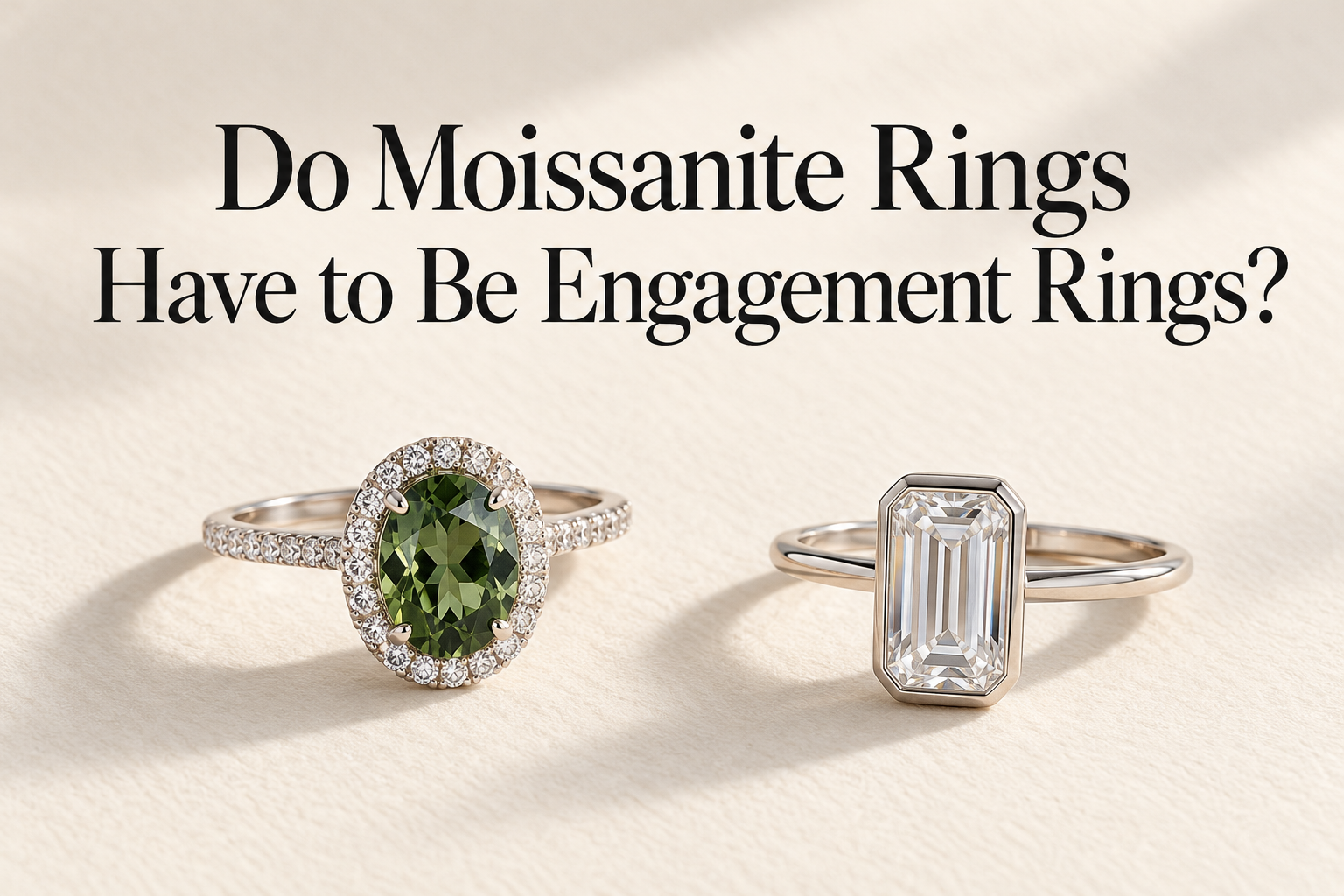
    The Green Moissanite Halo Ring offers an oval green moissanite, a surrounding halo and a pavé band. Its current description explicitly states S925 sterling silver, with listed 1 ct or 2 ct center options and US sizes 4–9. Choose green if you enjoy that design; it is not a universal signal about relationship status.

    The Emerald Cut Moissanite Bezel Ring is a different visual direction: an emerald-cut moissanite enclosed by a polished bezel. It explicitly states S925 sterling silver, a listed 2 ct center and US sizes 5–9. White gold tone and champagne gold tone are finish names, not solid-gold claims. Our finish-label guide explains that distinction.

    These are two design references, not an engagement-versus-fashion classification. Neither listing supplies the complete millimeter footprint or setting height used for a measured on-hand comparison here. Browse moissanite rings for the outline you like, then verify the selected option rather than using a larger carat label as a measure of meaning.

    Choose the finger with the actual fit in mind

    If you want to wear the ring on a different finger from another ring you own, measure that intended finger. A familiar ring size is not automatic evidence of fit elsewhere. Use the ring-size guide, ask for missing dimensions and confirm the final size before ordering. Do not depend on an unconfirmed resizing service to rescue a guess.

    Finger choice can be personal, but no placement comes with a universal interpretation guarantee. If a workplace or activity restricts rings, follow that requirement and choose another wearing moment. Our view about personal meaning is not a comfort, safety or all-day suitability test of either product.

    Try an ordinary outfit before inventing an occasion

    Imagine the ring with clothes you already wear for a normal afternoon. Keep your usual watch or bag in the comparison; there is no need to rebuild the outfit to justify the ring. If you like the result, you can let that be the finished decision. If you prefer it only for occasional outings, that is a useful answer too.

    Our blue-earring and brown-outfit scene uses the same small-change approach for a different category, rather than recommending a matching set. If you do want a private milestone, the new-job ring article offers an illustrative note-to-yourself scene. Neither purpose needs to be announced to make the piece enjoyable.

    What if I want to give the ring to someone else?

    Then the recipient’s understanding matters as well as yours. Discuss what you intend before relying on a ring to communicate it silently, particularly if a proposal could reasonably be expected in that situation. Confirm their design preference and size. Our ring-gift guide explores the practical questions; it does not tell you what a recipient will feel.

    You do not need to remove the romantic possibility from rings, or make every ring romantic. Choose the purpose with the person involved. For a self-purchase, start with whether you want the piece at all, rather than whether you can produce an occasion worthy of it.

    Sources and editorial method

    Meaning and styling recommendations are editorial opinions, not a survey, cultural-history claim or universal etiquette rule. Product details come from the linked live listings checked before publication. For ordinary handling, GIA’s care guidance supports storing removed jewelry separately with protection and keeping it away from chemicals. That general guidance does not certify these rings or establish a finish lifespan.

    The cover is an AI-generated editorial illustration of design alternatives, not exact product photography, an engagement announcement, an authentic try-on, a size comparison or a supplied two-ring set.
  • Blue Moissanite Earrings with a Brown Outfit

    Blue Moissanite Earrings with a Brown Outfit

    Try blue moissanite earrings with a brown outfit by starting with one familiar brown garment and treating the earrings as an optional color detail. Keep your usual trousers, shoes and bag for the first comparison. You do not need a blue accessory elsewhere, and the actual earring fit matters more than reproducing a cover image.

    The scene below is an editorial outfit proposal, not our own try-on, a customer’s diary or a claim that blue and brown suit everyone. Imagine a coffee-colored shirt you already enjoy wearing. The question is simply whether a small blue detail makes that particular outfit feel more like yours.

    The design reference: blue geometric studs

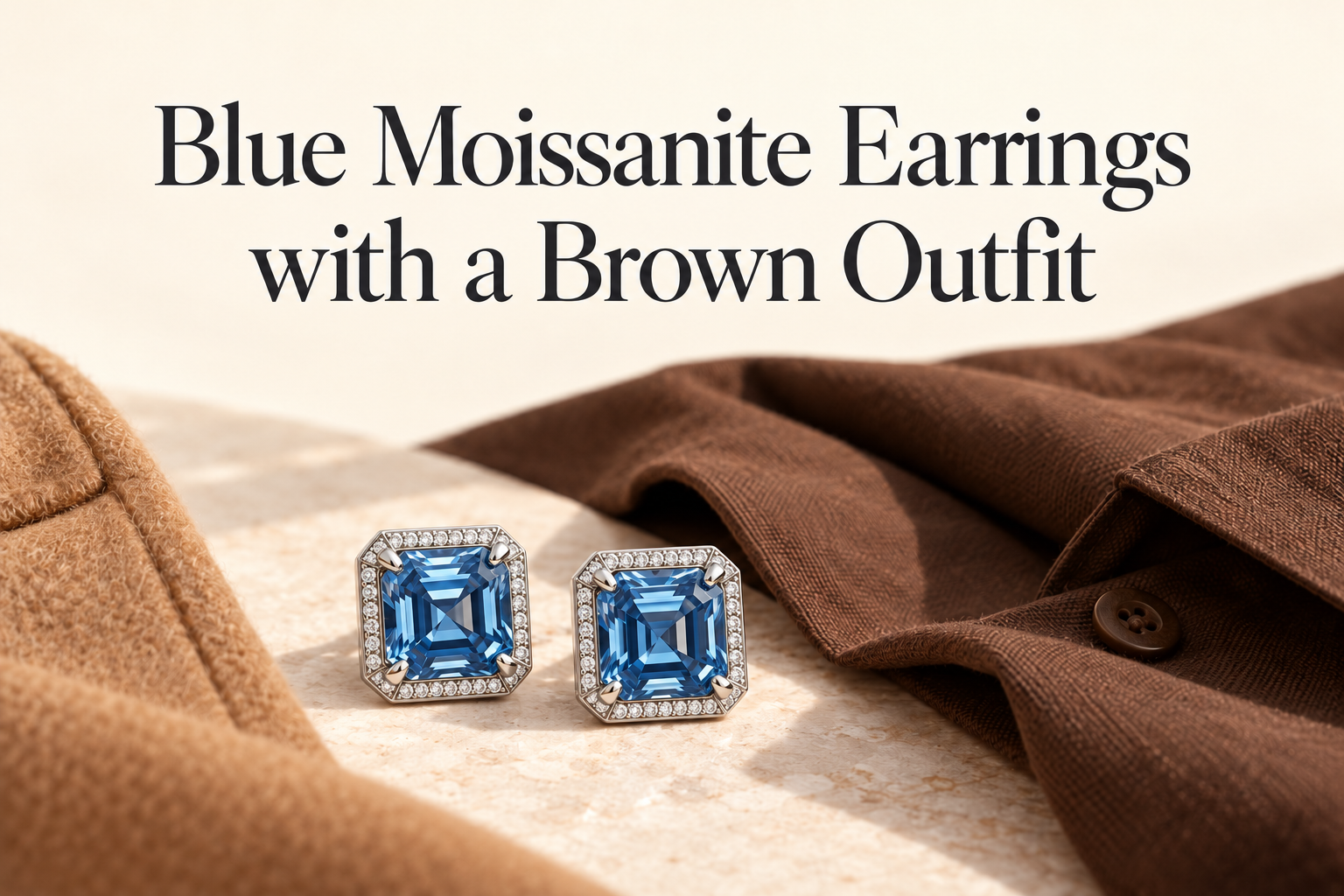
    The Blue Asscher-Cut Moissanite Stud Earrings provide the concrete design reference. Their current description identifies blue Asscher-cut centers and geometric frames. That combination gives the scene both a color and an outline to work with, without adding the movement of a drop earring.

    The checked description does not establish exact millimeter dimensions, weight, fastening or post-and-back metal. We therefore do not describe these studs as sterling silver, lightweight or suitable for a particular sensitivity. The option names also should not be converted into independently measured dimensions or a package-count guarantee. Confirm the exact selected item before ordering; a picture of two earrings is not a substitute for the seller’s stated contents.

    Start with the shirt you would wear anyway

    For this example, lay out a plain chocolate-brown shirt with your usual dark trousers. Leave the collar as you normally wear it rather than opening it to make space for extra jewelry. Consider the blue studs first with no new necklace. This gives you one change to assess, not a list of coordinated purchases.

    You might enjoy the contrast between the shirt’s broad area of brown and the earrings’ separate blue detail. Or you might prefer the brown outfit without that contrast. Look at the whole outfit in ordinary room light, with your arms relaxed and your familiar accessories present. The earrings do not need to become the brightest or most visible thing in every view.

    Change one surrounding detail

    If you already own a camel jacket, try it over the same clothes rather than buying another brown layer. Compare the open jacket with the shirt on its own. This is a visual experiment with garments you have, not a prescription that the jacket and shirt must belong to an exact color family.

    Hair can remain part of your ordinary styling, too. Tuck it back if you want to see the earrings more clearly; leave it loose if you prefer a glimpse of blue. Keep any glasses or other everyday accessories in the comparison. No particular hairstyle or face shape is required, and this article has not tested clearance against hair, collars or eyewear.

    Let a blue detail stay a detail

    A blue bag, manicure or scarf is optional. If you already enjoy one, include it and decide whether you still like the whole combination. If not, leave it out. You do not have to turn a pair of earrings into a new wardrobe palette. Our colored-moissanite wardrobe article explores that preference without assigning colors to personalities or skin tones.

    If the blue is not what you want, the Geometric Halo Moissanite Stud Earrings offer a different design reference: a square cushion-cut look framed by a halo. They are an alternative to compare, not a verified size, metal or finish match. You can also browse earrings or use a pair you already own.

    Before the outfit leaves the room

    Confirm the dimensions, weight, closure and relevant metals for the selected earrings if those details affect whether you can wear them. Our stud-versus-drop buying guide separates those practical questions from appearance. If contact with a collar or scarf is a concern, assess the real pieces rather than assuming a stud outline cannot catch.

    When changing clothes, set removed jewelry in a protected place rather than loose with keys or other pieces. GIA’s general care guidance supports separate protective storage; it does not verify these earrings’ finish durability. If you keep coming back to the same pair, that is enough of a reason to enjoy them. Jewelry does not need a formal invitation, a point also explored in our discussion of rings beyond engagement.

    Sources and editorial method

    Design details come from the linked live MSEARTHIA descriptions checked before publication. Outfit combinations are editorial preferences, not measured color harmony, a trend report or a wear test. GIA’s jewelry-care guidance supports only the limited protective-storage context, not product certification or material identification.

    The cover is an AI-generated editorial illustration. It is not an exact product photograph, a calibrated blue shade, an authentic try-on or proof of scale or supplied clothing.